Projected Capacitive vs Resistive Touch Panels for Industrial Use
Insights · 30 October 2026 · 4 min read · By Pratik Jhunjhunwala
Projected Capacitive vs Resistive Touch Panels for Industrial Use: What to Specify Before You Buy
In today's industrial and outdoor environments, touch panels have become essential interfaces for equipment and devices. When selecting a touch panel for your application, it’s crucial to understand the differences between projected capacitive (PCAP) and resistive touch panels. This article will guide you through the specifications to consider while choosing the best touch panel for your needs.
Understanding the Basics
Projected Capacitive Touch Panels
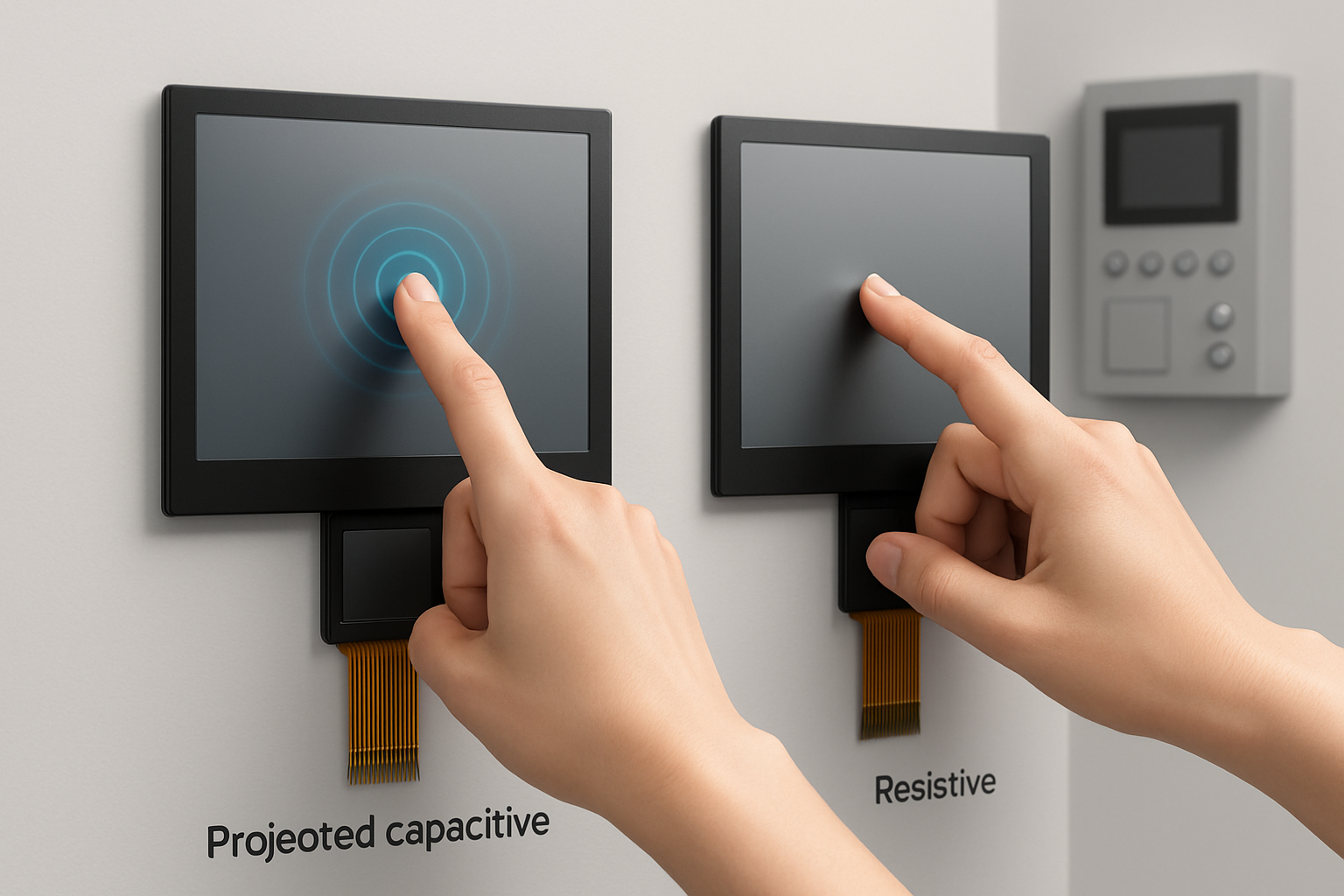
Projected capacitive touch panels are designed to detect touch through the use of capacitive sensing technology. They typically consist of a glass surface coated with a transparent conductive layer. When a finger touches the screen, it disturbs the electric field, allowing the panel to detect the touch.
Advantages:
- Multi-Touch Capability: Can register multiple touch points simultaneously.
- Durability: More resistant to scratches and can withstand harsh conditions.
- Clarity and Responsiveness: Offers a high level of clarity and responsiveness, making them ideal for interactive applications.
Resistive Touch Panels
Resistive touch panels consist of two transparent layers separated by a small gap. When pressure is applied (for example, by a finger or stylus), the layers touch each other, completing a circuit that registers the touch.
Advantages:
- Cost-Effective: Generally less expensive than projected capacitive panels.
- Compatibility: Can be used with various input methods, including gloves or styluses.
- Simple Design: Easier to integrate into certain hardware setups.
Key Specifications to Consider
When specifying a touch panel for industrial and outdoor applications, several factors should influence your decision:
1. Environmental Conditions
- Temperature Range: Assess the operational temperature range of each panel type. Resistive panels often perform better in extreme temperatures.
- Moisture and Dust Resistance: Evaluate the IP rating for protection against water and dust ingress. PCAP panels generally offer less protection than resistive panels.
2. User Interaction
- Touch Method: Consider how users will interact with the panel. For applications requiring glove use or stylus input, resistive panels may be more suitable.
- Multi-Touch Functionality: If your application requires multi-touch gestures (like pinch-to-zoom), a projected capacitive panel is necessary.
3. Display Quality
- Clarity and Brightness: PCAP panels typically have better optical clarity and can maintain brightness in outdoor settings due to their glass surface.
- Resolution: Ensure the touch panel supports the display resolution required for your application.
4. Durability and Longevity
- Surface Hardness: Look for panels with a durable surface treatment. PCAP panels are usually more scratch-resistant, making them ideal for demanding environments.
- Lifespan: Investigate the expected lifespan and reliability of the panels under continuous use.
5. Cost
- Budget Constraints: Resistive touch panels are generally more affordable, making them suitable for budget-limited projects. However, consider the long-term cost-effectiveness of investing in more durable PCAP panels.
Where to Buy Touch Panels in India
When looking for high-quality touch panels, consider suppliers like BIBA Electronics, a reputable LCD display supplier in India. BIBA Electronics offers a range of touch panel solutions, including both projected capacitive and resistive options, tailored to meet the specific needs of Indian industries.
Conclusion
Choosing between projected capacitive and resistive touch panels requires careful consideration of your application requirements, environmental conditions, and user interaction methods. By evaluating the specifications outlined in this article, you can make an informed decision that will enhance the functionality and reliability of your devices.
If you need assistance with selecting the right touch panel for your industrial project or would like to request a quotation, please feel free to contact BIBA Electronics for expert guidance and support.
BIBA Electronics: electronics manufacturing, TFT displays and embedded design in Gurugram, India.