Touch Controller ICs: I2C vs SPI and Fixing Ghost Touches
Insights · 5 November 2026 · 4 min read · By Pratik Jhunjhunwala
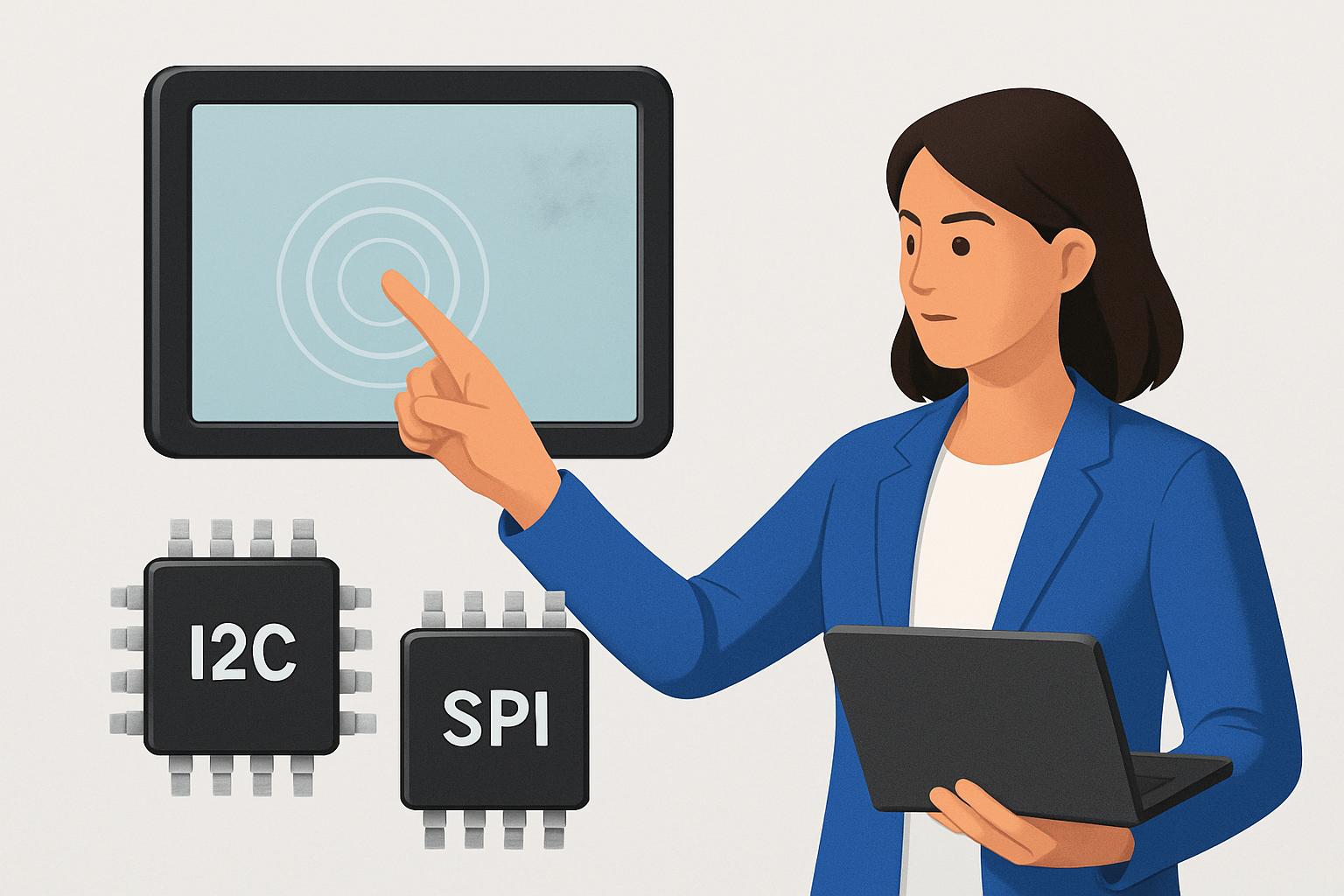
Touch Controller ICs and Tuning: Choosing I2C vs SPI, Fixing Ghost Touches and Noise in Capacitive Touch Panels
Choosing the right touch controller IC is critical for the performance of capacitive touch panels. This article will help you understand the differences between I2C and SPI protocols, how to troubleshoot common issues like ghost touches, and the importance of proper tuning.
Understanding Touch Controller ICs
Touch controller ICs are essential components that process touch inputs from capacitive touch panels. They convert the analog signals generated by the panel into digital signals that the host processor can understand. The choice of touch controller IC can significantly impact the responsiveness and accuracy of your touch interface.
I2C vs SPI: Pros and Cons
When selecting a touch controller IC, two common communication protocols are I2C (Inter-Integrated Circuit) and SPI (Serial Peripheral Interface). Each has its advantages and drawbacks:
I2C (Inter-Integrated Circuit)
- Simplicity: I2C uses only two wires (SDA for data and SCL for clock), making it easier to implement in designs with limited space.
- Multiple Devices: Supports multiple devices on the same bus, allowing for a simpler wiring scheme in multi-device setups.
- Lower Speed: Generally slower than SPI, with typical speeds up to 400 kHz (can be higher in fast-mode I2C).
SPI (Serial Peripheral Interface)
- Speed: Offers higher data transfer rates, typically in the range of several MHz, making it suitable for applications requiring fast data processing.
- Performance: Better for applications that have high touch sampling rates or require real-time response.
- More Wires: Requires more pins (MISO, MOSI, SCK, and often a separate chip select line), which can complicate PCB layout.
Choosing the Right Protocol
When deciding between I2C and SPI for your touch controller IC, consider the following factors:
- Application Requirements: If your application needs high-speed data processing, SPI might be the better choice.
- Design Complexity: For simpler designs, especially with multiple sensors, I2C can reduce wiring complexity.
- Power Consumption: I2C typically has lower power consumption, which can be crucial for battery-powered devices.
Troubleshooting Ghost Touches and Noise
Ghost touches occur when a capacitive touch panel registers touches that aren't made by the user. This can lead to frustrating user experiences. Here are some common causes and solutions:
Causes of Ghost Touches
- Electrical Noise: High electromagnetic interference (EMI) from nearby components can cause false touches.
- Improper Grounding: Insufficient grounding can lead to noise that affects the touch sensitivity.
- Environmental Factors: Humidity and temperature changes can affect the capacitance levels of the touch panel.
Solutions to Ghost Touches
- Shielding: Use proper shielding techniques to minimize EMI. Consider adding a ground plane in your PCB layout.
- Tuning Sensitivity: Adjust the touch controller's sensitivity settings through firmware to reduce the chances of ghost touches.
- Software Filtering: Implement software algorithms that can distinguish between real touches and noise, such as averaging touch data over time.
- Calibration: Regularly calibrate the touch panel to ensure accurate touch registration.
- Component Placement: Ensure that noisy components (like power supplies) are placed as far away from the touch controller as possible.
How to Choose a Touch Controller IC
When selecting a touch controller IC for your project, consider the following checklist:
- Touch Technology: Ensure compatibility with capacitive touch technology.
- Interface Protocol: Decide between I2C or SPI based on your application requirements.
- Number of Touch Points: Determine how many simultaneous touches you need to support.
- Noise Immunity: Look for controllers with built-in noise immunity features.
- Firmware Support: Check for available libraries and support for easy integration into your design.
- Power Consumption: Assess the power requirements, especially for battery-operated devices.
Conclusion
Selecting the right touch controller IC and addressing issues like ghost touches are vital for creating reliable and responsive touch interfaces. By understanding the differences between I2C and SPI, and employing effective troubleshooting methods, you can enhance the user experience of your products. BIBA Electronics is a leading segmented LCD supplier in India, offering expertise and solutions in touch panel technology. For custom segmented LCD display needs and detailed specifications, feel free to contact us for a quotation or samples.
BIBA Electronics: electronics manufacturing, TFT displays and embedded design in Gurugram, India.