Segmented LCD Display Explained: 7-Segment & Custom LCDs vs TFT
Insights · 12 October 2026 · 4 min read · By Pratik Jhunjhunwala
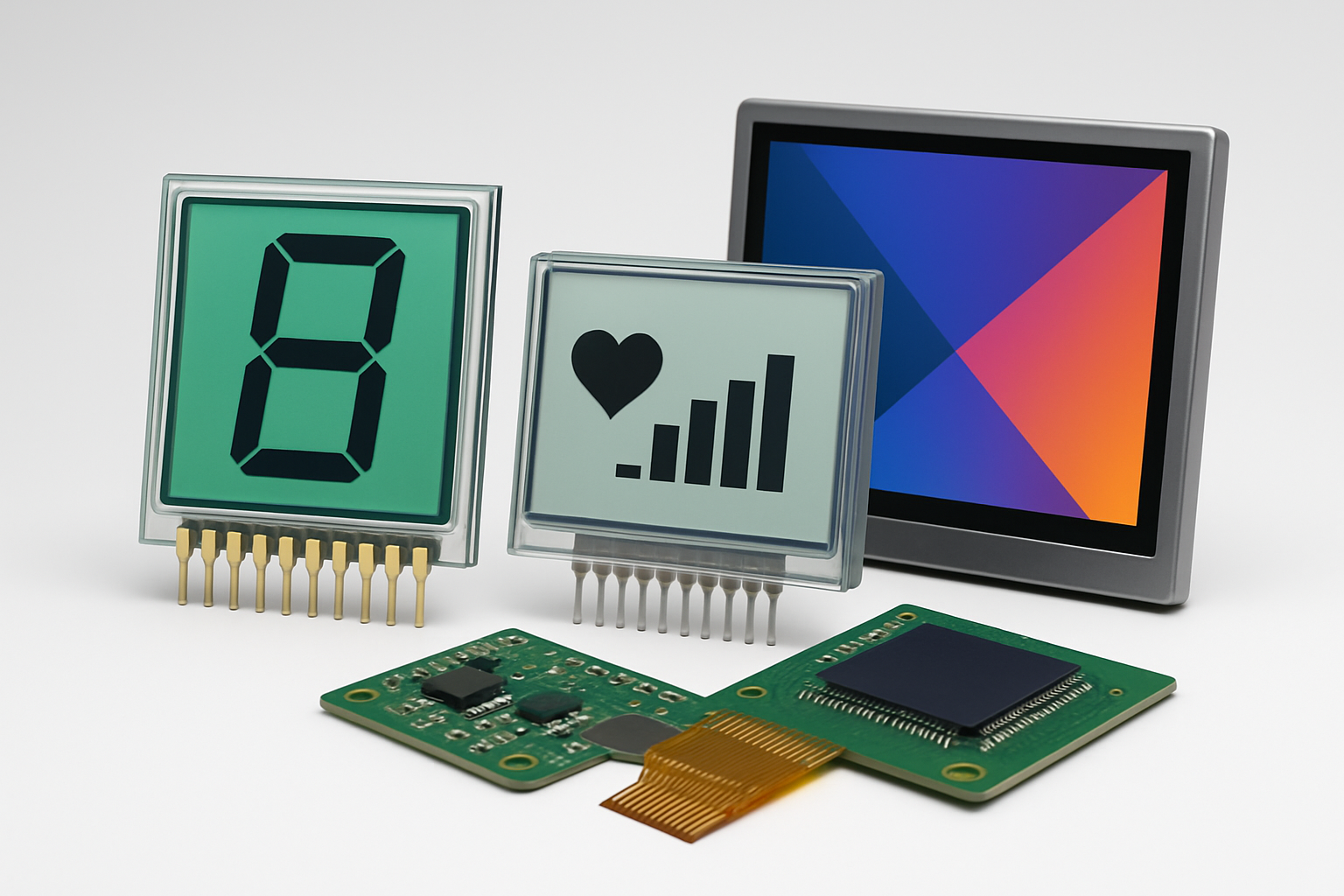
Segmented LCD displays, including 7-segment and custom segment LCDs, are widely used in various applications due to their simplicity, visibility, and efficiency. Unlike graphic TFT screens, segmented LCDs excel in certain scenarios, particularly in displaying numerical and alphanumeric information clearly. In this article, we will delve into how these displays work, their benefits, and where they outperform TFT screens.
Understanding Segmented LCD Displays
Segmented LCDs are made up of individual segments that can be turned on or off to create numbers, letters, or symbols. The most common form is the 7-segment display, which typically features seven segments arranged in a figure-eight pattern, along with an optional dot segment for decimal points. These displays are frequently used in applications like digital clocks, meters, and scoreboards.
How Segmented LCDs Work
-
Structure: The basic structure of a segmented LCD includes a layer of liquid crystal sandwiched between two polarizing filters. When an electric current is applied, the liquid crystals change orientation, allowing light to pass through or be blocked, thus illuminating specific segments.
-
Control: Each segment is controlled individually using a driver IC. This IC determines which segments to activate based on the input data, allowing for flexible display options.
-
Interfacing: Interfacing a segmented LCD with microcontrollers or other components typically involves using common protocols such as parallel or serial communication. Understanding the segmented LCD driver IC and interfacing is crucial for effective integration into your design.
Advantages of Segmented LCDs Over TFT Screens
While TFT displays have their own set of advantages, segmented LCDs offer several key benefits:
1. Power Efficiency
Segmented LCDs consume significantly less power than TFT displays, making them ideal for battery-operated devices. This characteristic is particularly advantageous in applications such as energy meters and handheld medical devices.
2. Visibility in Bright Environments
Segmented LCDs are easier to read in bright sunlight compared to TFT screens. Their reflective nature allows them to maintain visibility without requiring backlighting, which can drain battery life. This makes them suitable for outdoor applications where sunlight readability is crucial.
3. Cost-Effectiveness
Generally, segmented LCDs are more affordable to produce than TFT displays. For projects with tight budgets, opting for a segmented LCD can be a practical choice without sacrificing functionality.
4. Simplicity in Design
The simplicity of segmented displays allows for straightforward designs with fewer components. This can result in reduced manufacturing costs and shorter lead times, especially for custom segmented LCD designs.
5. Long Lifespan
Segmented LCDs are known for their longevity. Their robust construction and lower susceptibility to burn-in compared to TFT screens make them suitable for applications requiring durability.
Applications of Segmented LCD Displays
Segmented LCDs are particularly prevalent in various sectors:
- Energy Meters: Used for displaying readings clearly and efficiently.
- Medical Devices: Ideal for vital signs monitors, where clear numeric displays are essential.
- Industrial HMIs: Perfect for control panels that require simple, reliable readouts.
- Consumer Electronics: Commonly found in clocks, timers, and calculators.
Choosing the Right Segmented LCD Display
When selecting a segmented LCD display for your project, consider the following factors:
- Type of Segments: Choose between TN, HTN, STN, or FSTN segments based on your visibility requirements and viewing angles.
- Backlighting: If visibility in low-light conditions is necessary, consider a segmented LCD with backlighting options.
- Size and Shape: Determine the dimensions required for your application and if custom shapes are needed.
- Driver IC Compatibility: Ensure the chosen display is compatible with your existing microcontroller or driver circuitry.
- Minimum Order Quantity and Lead Time: Verify with your segmented LCD supplier in India regarding MOQs and expected lead times for delivery.
Conclusion
Segmented LCD displays, such as 7-segment and custom segment LCDs, provide distinct advantages for specific applications, particularly where power efficiency, visibility, and cost-effectiveness are critical. When considering a segmented LCD for your project, ensure that you evaluate all relevant factors and specifications.
If you're looking for a reliable segmented LCD supplier in India, BIBA Electronics offers a range of solutions tailored to your needs, including custom segmented LCD designs. Contact us today for quotations or samples to get started on your next project.
BIBA Electronics: electronics manufacturing, TFT displays and embedded design in Gurugram, India.