TFT LCD vs OLED vs AMOLED: Choosing the Right Display Technology
Insights · 13 September 2026 · 4 min read · By Pratik Jhunjhunwala

TFT LCD vs OLED vs AMOLED: Choosing the Right Display Technology for Your Embedded Product
When it comes to selecting the right display technology for your embedded product, understanding the differences between TFT LCD, OLED, and AMOLED is crucial. Each technology has unique characteristics, advantages, and limitations that can impact the functionality, aesthetics, and cost of your device. In this article, we will explore these differences to help you make an informed decision.
Understanding Display Technologies
1. TFT LCD (Thin Film Transistor Liquid Crystal Display)
TFT LCDs are a type of liquid crystal display that uses thin-film transistor technology to improve image quality. Here are some key features:
- Backlit Display: TFT LCDs require a backlight, which can make the displays less efficient in terms of power consumption compared to OLED technologies.
- Color Reproduction: Good color reproduction but can struggle with deep blacks as the liquid crystals do not emit light.
- Cost-Effective: Generally more affordable than OLED and AMOLED displays, making them a popular choice for many applications.
- Viewing Angles: Limited viewing angles compared to OLED, where colors can appear washed out at extreme angles.
2. OLED (Organic Light Emitting Diode)
OLED displays consist of organic compounds that emit light when an electric current is applied. Key attributes include:
- Self-Emissive: Each pixel emits its light, leading to deeper blacks and higher contrast ratios.
- Thin and Flexible: OLEDs can be made thinner and even flexible, allowing for innovative product designs.
- Color Vibrancy: Excellent color reproduction with vibrant visuals, making them ideal for high-end applications.
- Power Consumption: More power-efficient than TFT LCDs, especially when displaying dark images, as black pixels are turned off.
3. AMOLED (Active Matrix Organic Light Emitting Diode)
AMOLED is an advanced version of OLED technology that integrates an active matrix to control the individual pixels. Key features include:
- Fast Response Times: AMOLED displays have quicker response times, making them suitable for high-motion content.
- Better Refresh Rates: Ideal for applications where screen refresh rates matter, such as gaming or video playback.
- Superior Color Accuracy: Provides even better color accuracy and brightness control compared to standard OLED displays.
- Higher Cost: Typically more expensive to produce than both TFT LCD and standard OLED displays.
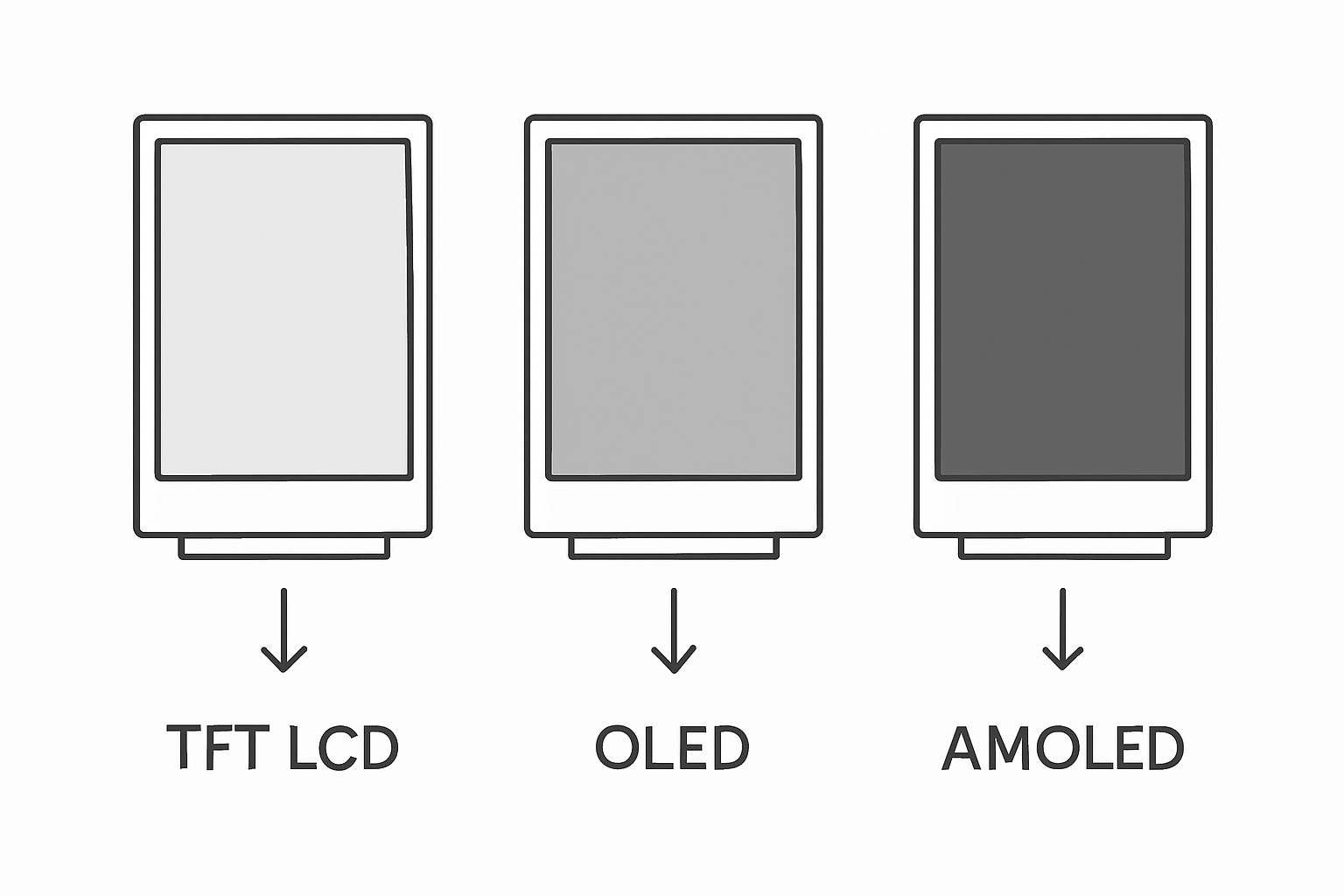
Comparison of Key Features
| Feature | TFT LCD | OLED | AMOLED |
|---|---|---|---|
| Backlight | Yes | No | No |
| Contrast Ratio | Moderate | High | Very High |
| Thickness | Thicker | Thinner | Thinner |
| Viewing Angle | Limited | Wide | Wide |
| Power Consumption | Higher | Lower (dark images) | Lower (dark images) |
| Cost | Lower | Moderate | Higher |
How to Choose the Right Display Technology
When deciding which display technology to use for your embedded product, consider the following factors:
-
Application Requirements: What will the display be used for? High-motion and color-critical applications may benefit from AMOLED, while simple user interfaces could suffice with TFT LCD.
-
Power Consumption: If battery life is a concern, OLED or AMOLED displays may provide significant advantages over TFT LCDs, especially in devices displaying dark themes.
-
Budget Constraints: Assess your budget. TFT LCDs are generally the most cost-effective, while AMOLED displays tend to be on the pricier side.
-
Design Flexibility: If your product demands a thin or flexible display, OLED or AMOLED would be preferable.
-
Environmental Conditions: Consider where the device will be used. For outdoor applications, TFT LCDs with high brightness options may outperform OLED technologies in direct sunlight.
Conclusion
Choosing the right display technology involves evaluating your specific needs against the strengths and weaknesses of each option. Whether you opt for TFT LCD, OLED, or AMOLED, understanding these factors will enable you to make a more informed choice that aligns with your project goals.
For those looking for high-quality display solutions, BIBA Electronics offers an extensive range of TFT LCDs and custom display designs tailored to meet your unique requirements. Contact us today for a quotation or to request samples to see how our products can enhance your embedded designs.
BIBA Electronics: electronics manufacturing, TFT displays and embedded design in Gurugram, India.