Interfacing Segmented LCDs with STM32: Driver ICs and Multiplexing Explained
Insights · 11 November 2026 · 4 min read · By Pratik Jhunjhunwala
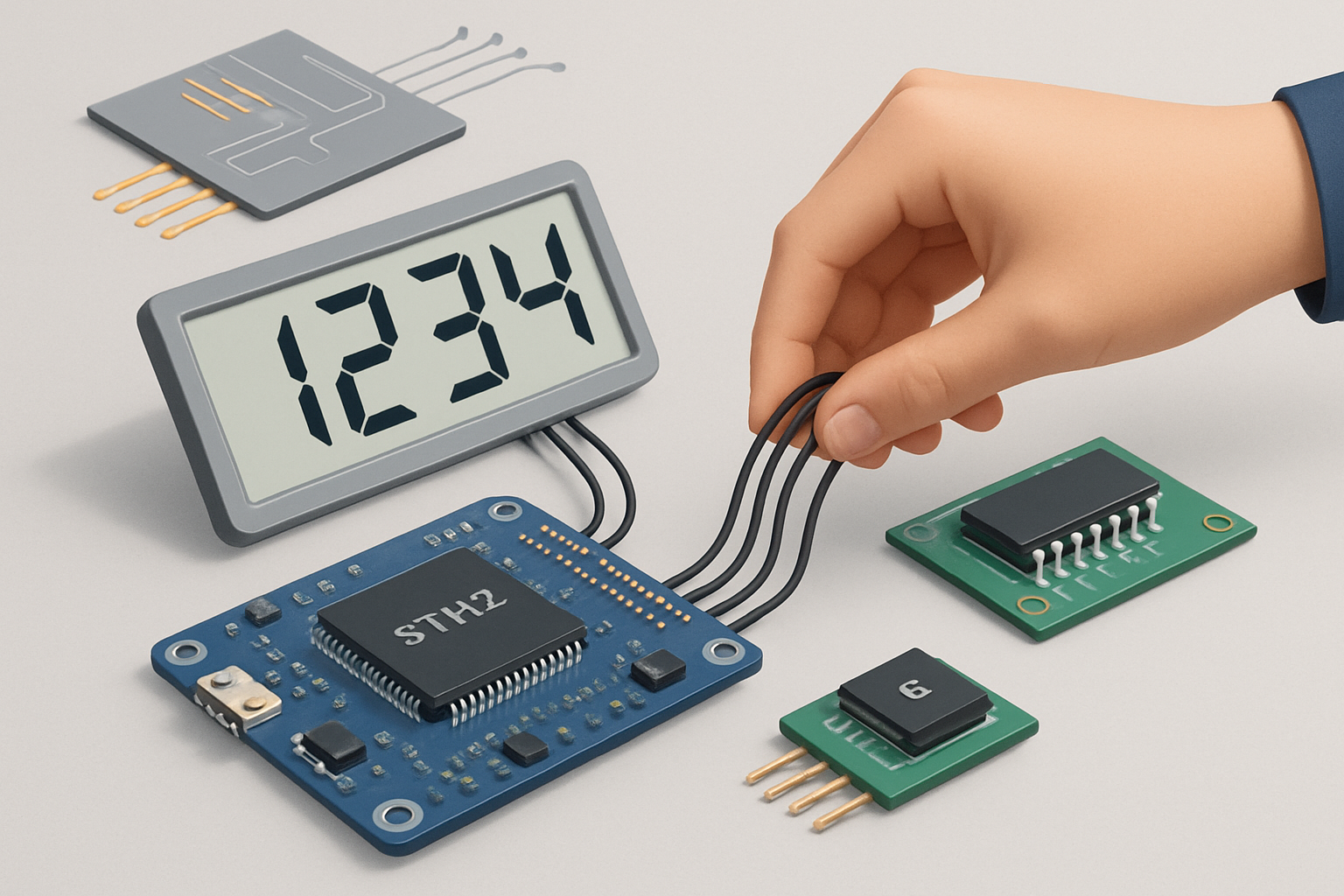
Interfacing segmented LCDs with microcontrollers like the STM32 involves understanding driver ICs and multiplexing techniques. This article will guide engineers and procurement managers through the essentials, including how to select the right driver IC, multiplexing methods (static, 1/2, 1/3, 1/4 duty), and practical steps for implementation.
Understanding Segmented LCDs and Driver ICs
Segmented LCDs are a popular choice for various applications, including energy meters, medical devices, and industrial HMIs. They consist of individual segments that can be activated to display numbers, letters, or symbols. The choice of a suitable driver IC is crucial for efficient operation and reliable performance.
What is a Segmented LCD Driver IC?
A segmented LCD driver IC is a specialized chip designed to control the display segments of an LCD. It takes input from a microcontroller, processes it, and outputs signals to the corresponding segments of the LCD. Commonly used driver ICs include:
- MAX6957: Supports multiple segments and multiplexing options.
- LM032: An economical choice for low-power applications.
- KS0108: A graphic LCD controller that can also drive segmented displays.
Understanding the specifications of these ICs is essential when choosing the best fit for your project.
Multiplexing Techniques for Segmented LCDs
Multiplexing is a technique used to reduce the number of I/O pins required to control an LCD. It involves activating different segments in sequence, thus allowing multiple segments to be displayed without needing individual control lines for each segment. The main types of multiplexing are:
- Static Multiplexing: Each segment is driven continuously. This method is simple but can lead to higher power consumption.
- 1/2 Duty Cycle Multiplexing: Segments are activated in pairs. This reduces power consumption but requires more complex timing control.
- 1/3 Duty Cycle Multiplexing: Segments are activated in groups of three. This further reduces power consumption and is suitable for larger displays.
- 1/4 Duty Cycle Multiplexing: Segments are activated in groups of four, offering the lowest power consumption but requiring more sophisticated driving methods.
Choosing the right multiplexing technique depends on your application requirements, such as power consumption, cost, and complexity.
How to Interface a Segmented LCD with STM32 Microcontroller
To interface a segmented LCD with an STM32 microcontroller, follow these steps:
Step 1: Select the Right Driver IC
Review the specifications of various driver ICs and select one that meets your project requirements. Consider factors like power supply voltage, maximum current, and multiplexing capabilities. BIBA Electronics offers a range of segmented LCDs and can assist in selecting the most suitable driver IC.
Step 2: Set Up the Circuit
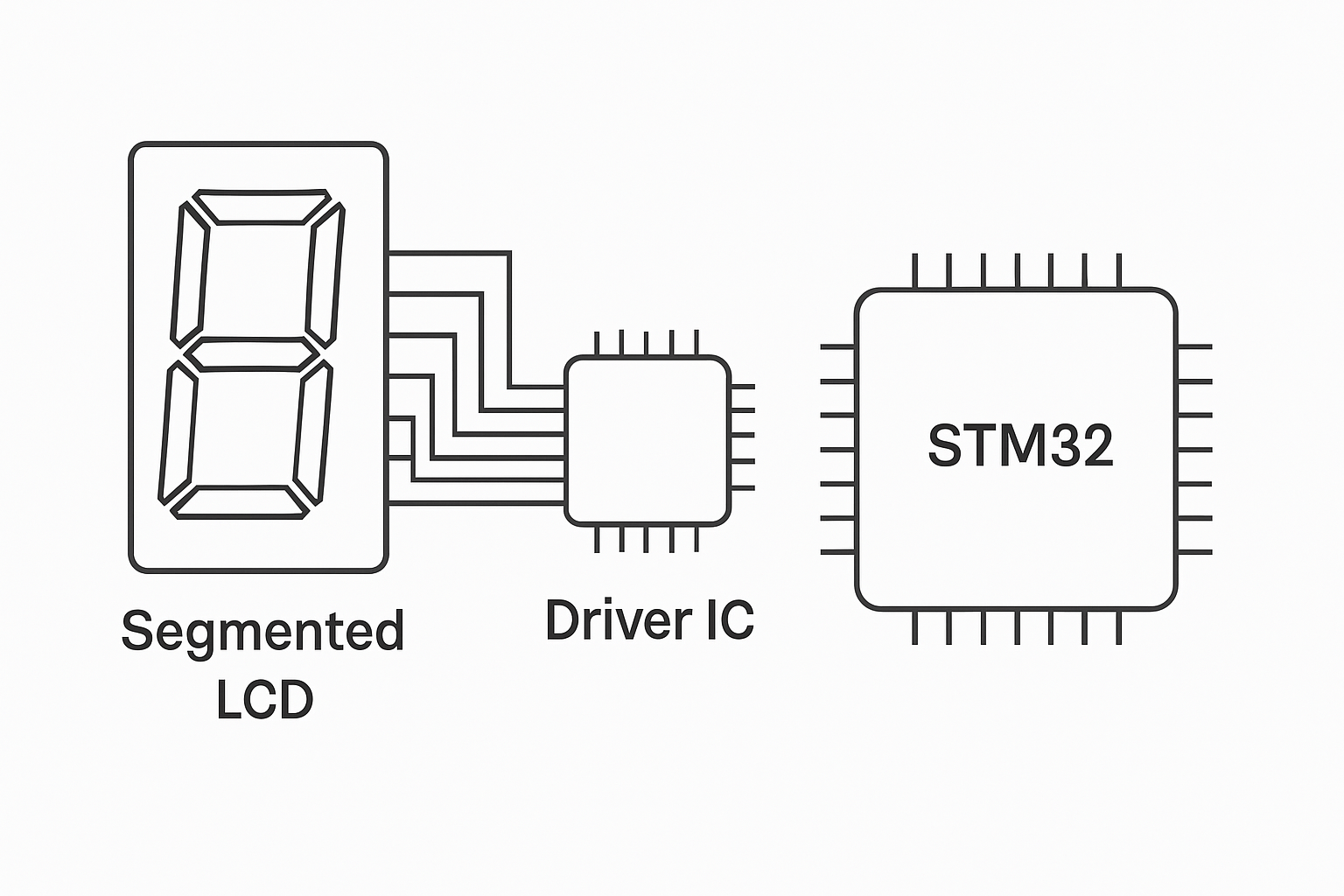
- Connect the Driver IC to STM32: Connect the control pins of the driver IC to the STM32 GPIO pins. Ensure that power and ground connections are secure.
- Connect the Segmented LCD: Wire the LCD segments to the output pins of the driver IC. Ensure the segment connections match the driver IC’s configuration.
- Add Capacitors: Use decoupling capacitors to stabilize power supply connections and reduce noise.
Step 3: Program the STM32
- Initialize GPIO Pins: Set the GPIO pins connected to the driver IC as outputs in your code.
- Configure the Driver IC: Send initialization commands to the driver IC according to its datasheet. This may include setting the multiplexing mode and brightness levels.
- Display Data: Create functions to control the segments by sending the desired data to the driver IC. For multiplexed displays, ensure the timing is correct to avoid flickering.
Step 4: Testing
- Compile and Upload the Code: Ensure there are no errors and upload the code to the STM32.
- Verify Operation: Check that the correct segments are lit based on your input commands. Adjust the code as necessary to fix any issues.
Considerations for Design
When designing your system, consider the following:
- Power Requirements: Understand the power consumption of both the driver IC and the segmented LCD. Ensure your power supply can handle peak consumption.
- Environmental Factors: Depending on your application, consider the operating temperature and humidity levels for the segmented LCD.
- Interfacing with Other Components: Ensure compatibility with other components in your system, such as sensors or additional displays.
Conclusion
Interfacing segmented LCDs with STM32 microcontrollers using driver ICs and multiplexing techniques can enhance your product's display capabilities while optimizing power efficiency. BIBA Electronics is a trusted segmented LCD supplier in India and can assist with custom solutions tailored to your needs. Should you require further guidance or wish to request a quotation or samples, please feel free to contact us.
BIBA Electronics: electronics manufacturing, TFT displays and embedded design in Gurugram, India.