Segmented LCD vs TFT vs OLED for Battery-Powered Devices
Insights · 9 November 2026 · 4 min read · By Pratik Jhunjhunwala
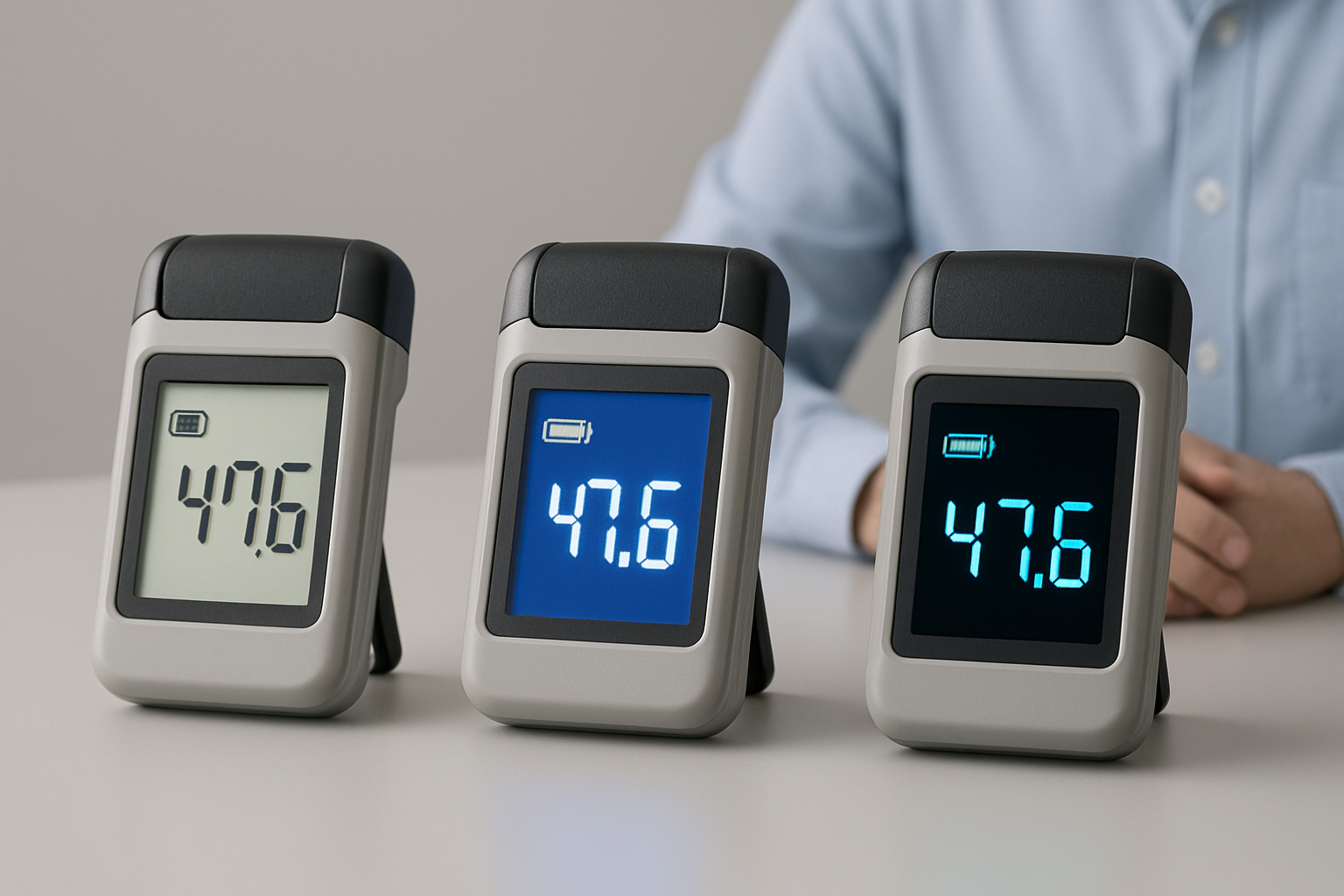
Segmented LCD vs TFT vs OLED for Battery-Powered Meters and Industrial Devices
When it comes to selecting display technology for battery-powered meters and industrial devices, engineers and product managers often find themselves weighing the pros and cons of segmented LCDs, TFTs, and OLEDs. Each technology has its unique characteristics that can significantly impact power consumption, cost, and readability. In this article, we will compare these three display types to help you make an informed decision for your next project.
Understanding the Display Technologies
1. Segmented LCDs
Segmented LCDs are designed to display numerical and alphanumeric information using discrete segments. They are commonly used in applications like digital meters, clocks, and calculators. These displays are known for their low power consumption, especially when displaying static images.
2. TFT Displays
Thin-Film Transistor (TFT) displays are a type of LCD that offers full-colour graphics and video capabilities. They are widely used in smartphones, tablets, and industrial devices requiring rich visuals. TFTs typically consume more power than segmented LCDs but offer better readability in dynamic applications.
3. OLED Displays
Organic Light Emitting Diodes (OLED) are known for their vibrant colours and true blacks because they emit light individually per pixel. OLEDs have low power consumption when displaying dark images, making them a viable option for battery-powered applications, although they can consume more power when displaying bright content.
Comparison Criteria
To effectively compare segmented LCDs, TFTs, and OLEDs, we will look at three key factors: power consumption, cost, and readability.
1. Power Consumption
-
Segmented LCDs: These displays have the lowest power consumption, particularly when displaying static content. They can last for years on a single battery, making them ideal for battery-operated devices such as energy meters.
-
TFT Displays: TFTs generally consume more power than segmented LCDs due to the backlighting required for visibility. However, advancements in technology have led to low-power TFT variants that can be suitable for battery applications.
-
OLED Displays: OLEDs can offer competitive power consumption, particularly when displaying darker images. However, their power usage can spike with bright visuals, which may lead to shorter battery life in applications where the content frequently changes.
2. Cost
-
Segmented LCDs: Generally, segmented LCDs are the most cost-effective solution for applications where minimal information needs to be displayed. They are simpler to manufacture, leading to lower overall costs.
-
TFT Displays: TFT technology is more expensive due to its advanced manufacturing process and the additional components needed for backlighting. This could be a significant factor in cost-sensitive projects.
-
OLED Displays: OLEDs are typically the most expensive option due to the complexity of their production and the materials used. While they provide excellent visual quality, the higher cost may not be justified for simpler applications.
3. Readability
-
Segmented LCDs: These displays are highly readable in bright sunlight, especially if designed with a reflective surface. They are ideal for outdoor applications, such as energy meters and industrial panels.
-
TFT Displays: TFTs offer excellent readability and can display complex graphics, but their performance may be impaired in direct sunlight unless they are specifically designed for outdoor use (like high-brightness displays).
-
OLED Displays: OLEDs provide superior contrast and vibrant colours, which enhance readability in low-light conditions. However, under bright sunlight, their visibility may be compromised compared to segmented LCDs.
How to Choose the Right Display
When deciding between segmented LCDs, TFTs, and OLEDs for your battery-powered meters and industrial devices, consider the following checklist:
-
Application Requirements: Assess the information you need to display. If it's primarily numeric, a segmented LCD might suffice. For graphical content, consider TFT or OLED.
-
Power Constraints: Evaluate the battery life requirements. If low power consumption is crucial, segmented LCDs and low-power TFTs are preferred.
-
Cost Considerations: Determine your budget. For cost-sensitive applications, segmented LCDs are usually the best choice.
-
Environmental Conditions: Consider where the device will be used. If it will be outdoors, segmented LCDs or high-brightness TFTs are recommended.
-
Readability Needs: If readability in various lighting conditions is a priority, assess how the display performs under those conditions.
Conclusion
Choosing the right display technology for battery-powered meters and industrial devices is critical for performance and user satisfaction. Each display type has its strengths and weaknesses, and the best choice depends on your specific application needs and constraints.
BIBA Electronics, a leading segmented LCD supplier in India, offers a range of display solutions to meet your requirements. From custom segmented LCD designs to various display technologies, we can assist you in selecting the ideal solution. For quotations or samples, please contact us today.
BIBA Electronics: electronics manufacturing, TFT displays and embedded design in Gurugram, India.