TN vs HTN vs STN vs FSTN: Segmented LCD Technology Compared
TN, HTN, STN and FSTN compared side by side -- how each works, contrast, viewing angle, relative cost and best-fit application.
TN, HTN, STN and FSTN are the four liquid-crystal technologies behind almost every segmented LCD in production today -- the kind of display used in calculators, digital clocks, panel meters, energy meters and multi-line industrial instrument panels. All four are built the same basic way, a liquid-crystal layer sandwiched between two polarizing filters, and all four are read out the same way, as fixed numeric, alphanumeric and icon segments rather than a pixel grid. What changes between them is the crystal's twist angle and pre-tilt, and that single variable is what controls viewing angle, contrast, and how many segments one controller can multiplex onto a small connector.
Picking the right one comes down to three questions: how many digits and icons does the panel need, how will it be viewed (straight-on versus off-angle, lit versus unlit), and how tightly is cost constrained. The comparison table below lays out how TN, HTN, STN and FSTN answer those three questions differently, with a real sample of each technology BIBA has built.
BIBA Electronics Pvt. Ltd. is a Gurgaon, India-based manufacturer and supplier of custom segmented LCD displays across all four of these technologies -- TN, HTN, STN and FSTN -- built to order for OEM customers worldwide. Every segmented LCD BIBA ships is engineered from a blank sheet around the customer's exact digit layout, icon set, glass size and PCB connector, in whichever of these four technologies best fits the application, rather than sold as a fixed catalog part. BIBA supplies segmented LCDs for instrumentation, appliances, automotive and industrial control applications from its manufacturing facility in Gurgaon.
Side-by-Side Comparison
| Example | Technology | Contrast & Viewing | Relative Cost | Best Suited For |
|---|---|---|---|---|
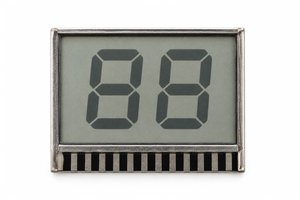 | TNTwisted Nematic The original, simplest segmented LCD technology: a 90° liquid-crystal twist with single-segment or static addressing. | Moderate contrast, wide viewing angle | Lowest | Cost-sensitive counters & basic digital meters |
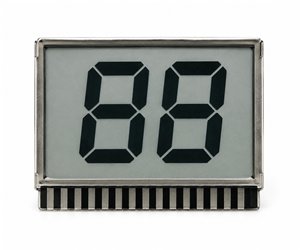 | HTNHigh-Contrast TN A TN variant with a higher crystal pre-tilt angle, giving sharper on/off contrast than standard TN at a similar driving cost. | High contrast, moderate-wide viewing angle | Low | Panel meters & handheld instruments needing crisp digits |
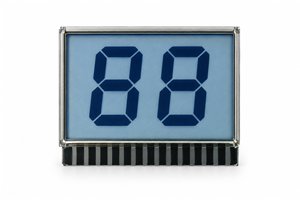 | STNSuper-Twisted Nematic A steeper 180-270° crystal twist gives a sharp threshold response, letting one controller multiplex far more segments than TN or HTN. | Higher contrast at high multiplex ratios; natural blue/yellow tint | Moderate | Multi-digit, icon-heavy panels -- energy meters, data loggers |
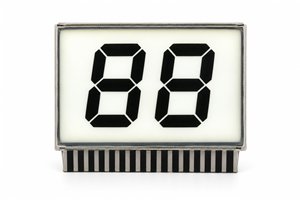 | FSTNFilm-Compensated STN STN with an added retardation film that cancels the natural tint, giving a true black-on-white image while keeping STN's segment density. | High contrast, neutral black-on-white, backlight-friendly | Moderate-High | Backlit instrument clusters, automotive & outdoor equipment |
Which Should You Choose?
As a rule of thumb: choose TN for the simplest, lowest-cost display with only a handful of digits viewed mostly straight-on. Choose HTN when those same few digits need to read more sharply at a glance, without taking on STN's multiplexing complexity. Choose STN when the panel needs many digits or icons multiplexed off a small connector -- the standard choice for energy meters and data loggers. Choose FSTN when you need STN's segment density but also want a clean, neutral, backlight-friendly appearance rather than STN's natural tint. BIBA's team can also recommend the right technology directly once you share your digit count, icon list and viewing environment.
Need a Segmented LCD Built to This Spec?
Every BIBA segmented display is engineered from a blank sheet around your product -- the layout, icons and connector are drawn to match your exact requirement.